Why we named it Cresques
The Catalan Atlas of 1375 told merchants where the routes ran and who held the gold. That is the job we set ourselves — and here is how to say the name.

Marta Zielińska · Market research
16 October 2026 · 3 min read
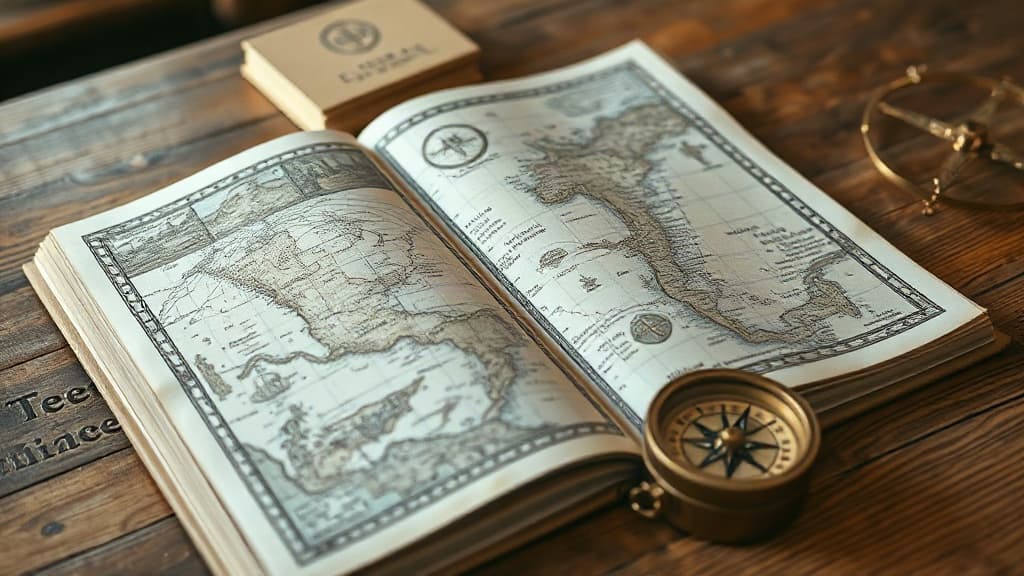
A map that told merchants where to go
In 1375, in Majorca, the cartographer Abraham Cresques, or his workshop, finished the work now known as the Catalan Atlas. The Bibliothèque nationale de France holds it under the shelfmark Espagnol 30, attributes it to Abraham Cresques or his workshop, and describes it as a nautical atlas of six double parchment leaves mounted on wooden boards, made in Majorca in 1375. It had reached France by the end of the fourteenth century: it is listed in the inventory of King Charles V's library in 1380, and it has stayed in Paris ever since.
Most sea charts of the period drew coastlines and harbours. The Catalan Atlas did more. It runs from the Atlantic to China, it is the first map to record what Marco Polo had brought back about Central Asia, and it marks the inland world — cities, rulers, routes — that mattered to anyone trading beyond the quayside.
Its best-known image sits on the westernmost map panel (tableau 6 in the Bibliothèque nationale de France's numbering). Mansa Musa, the ruler of Mali, is seated on a throne holding a golden orb. The caption calls him the richest and most distinguished ruler of the whole region "on account of the great quantity of gold that is found in his lands". A merchant looking at that panel was not admiring geography. He was reading a brief: this is where the wealth is, this is who controls it, and these are the roads that lead there.
Why that story fits what we build
A manufacturer entering a new country asks the same three questions a fourteenth-century trader asked. Who already sells my kind of product there? Which route do goods take to the buyer — direct, through a dealer, through a purchasing body? And how do I open the conversation without getting it wrong on day one?
Cresques answers those questions with evidence rather than opinion. A public contract award notice published on TED records that a named company won a contract to supply, say, office furniture to a hospital in Lyon. That company is, demonstrably, selling office furniture in France. Collect enough notices for one category and one country, and you have something close to the atlas: not a list of names, but a map of who holds the routes.
We like the comparison partly because of what the old atlas was not. It was not a guarantee. It did not tell the trader the price of gold in Mali or whether a particular guide was honest. It gave him the lie of the land so that he could decide for himself and start in the right place. That is also a fair description of what evidence from award notices can and cannot do, and we would rather say so plainly than oversell it.
What the name is not
We did not want a name that promised more than the product delivers. Words like "tender", "bid" or "lead" all point to things we deliberately do not do. Cresques does not help you win public contracts. Award notices are evidence of who sells what, where; the selling itself happens through distributors, which is a common route for manufacturing SMEs into a new market.
We also wanted a name that belonged to no one else in our field, worked in every EU language, and carried a story worth telling. Cresques is unusual enough to remember and old enough to be free of baggage.
How to say it
KRES-kes. Two syllables, stress on the first, a hard "k" at the start and a soft "s" at the end — "cress-kess" if that is easier. The name is Catalan, and we keep the original spelling.
Where to see the original
The atlas is held in Paris at the Bibliothèque nationale de France and has been digitised; the catalogue record is linked below. If you ever stand in front of a facsimile, find the king with the gold on the westernmost map panel, then follow the routes drawn towards him. That is the picture we have in mind every time someone opens a new market in Cresques.