Incoterms, VAT and import: how US-made goods reach an EU distributor (DDP vs DAP, importer of record)
Under DAP your EU distributor imports the goods and deducts the import VAT; under DDP you become the importer and need an EORI number and VAT advice.

Tomasz Kowal · Data and public procurement
Updated 16 October 2026 · 6 min read
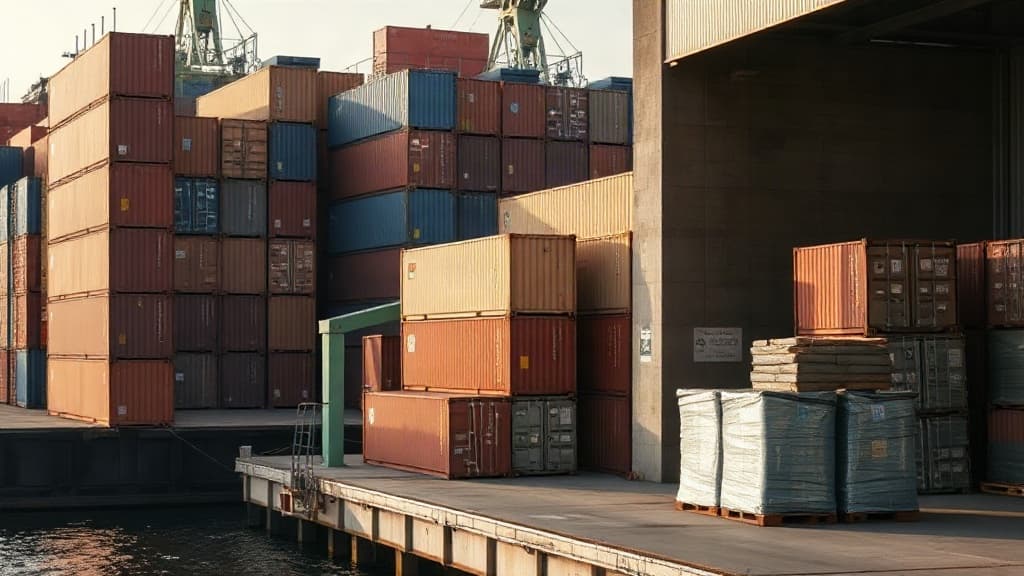
A distributor in Lyon or Düsseldorf will ask one logistics question before any other: who brings the goods into the EU? The answer decides who files the customs declaration, who pays duty and import VAT, who needs registrations in Europe and how much cash is tied up at the border. Two Incoterms rules sit at the center of that question, DAP and DDP, and they put the burden on opposite sides of the table.
Putting it simply: under DAP you deliver to the distributor's door, and the distributor clears the goods, pays the duty and import VAT and deducts that VAT in its return. Under DDP you take on import clearance and duty yourself, which means an EORI number, an EU-based customs representative and VAT questions in the country of import. Unless you already run an EU import operation, offer DAP.
Incoterms 2020: DAP and DDP
The ICC describes the Incoterms rules as "a set of eleven three-letter trade terms" that clarify "the tasks, costs and risks involved in the delivery of goods from sellers to buyers." Incoterms 2020 entered into force on January 1, 2020.
The ICC's own checklist draws the line clearly. Choose DAP if you want to be responsible for costs and risks, "NOT including the unloading of the goods at destination," but "do not want to pay duties or be otherwise responsible for import customs formalities." Choose DDP if you want "total responsibility up to delivery at the buyer's premises or the named delivery point, including import clearance, which may pose problems." The checklist adds that "practical realities may prevent a seller from being able to undertake import clearance, so choose this rule with caution."
Always write the rule, the place and the edition: "DAP Düsseldorf warehouse, Incoterms 2020."
Importer of record: the US term and its EU counterpart
At home, CBP regulations define the importer as "the person primarily liable for the payment of any duties on the merchandise," which may be the consignee or the importer of record (19 CFR 101.1). EU law does not use the phrase "importer of record." The Union Customs Code (Regulation (EU) No 952/2013, whose substantive provisions apply since May 1, 2016) speaks of the declarant: the person lodging a customs declaration in its own name, or the person in whose name it is lodged (Article 5(15)). A new Union Customs Code, Regulation (EU) 2026/2108, replaces it from September 21, 2027; it defines an "importer", and an importer established outside the EU must be represented by an indirect representative established in the EU (Article 27(3)(e)).
Three rules from the Code matter to a US company:
- The declarant must be established in the EU (Article 170(2)), with narrow exceptions such as transit, temporary admission or occasional declarations that customs consider justified.
- The declarant is the debtor for the import duty (Article 77(3)). Where an indirect customs representative acts in its own name on your behalf, you are a debtor too.
- A customs representative must itself be established in the EU (Article 18), acting either directly (in your name) or indirectly (in its own name).
So under DAP the distributor, or a representative it appoints, is the declarant. Under DDP the import is yours, and since you are not established in the EU, you need an EU-established indirect representative that lodges the declaration in its own name on your behalf; a direct representative would make you the declarant, which is allowed only for occasional declarations (Article 170(3)).
EORI
The Commission states that an EORI number "is mandatory for the clearance of all types of customs operations in the customs territory of the EU." Operators outside the EU that lodge customs declarations need one and register in "the EU country in which they intend to carry out their first customs operation." Under DDP that is you; under DAP the declaration is the distributor's side.
Duties: look them up, do not guess
The 27 member states form a customs union: duties on goods from outside the EU are generally paid when the goods first enter, after which they circulate freely. The rate depends on classification. The first six digits of your US Schedule B or HTS code are the international Harmonized System and stay the same in the EU; the EU's Combined Nomenclature adds two digits, and TARIC adds two more.
TARIC, "the integrated tariff of the European Union," is an online database that brings together tariff duties, preferences, suspensions, quotas, anti-dumping duties and import restrictions. The ITA tells US exporters to consult it; it is updated daily.
Check it on the date you quote, not from a headline. Following the EU–US joint statement of August 21, 2025, Regulation (EU) 2026/1455 sets a 0% duty, from July 1, 2026 until December 31, 2029, on the US-origin goods listed in its Annex I — check whether your CN code is listed — and the Commission can suspend it if the US does not keep to the joint statement (Article 3). What applies to your code on a given day is what TARIC shows.
Import VAT: who pays and who deducts
VAT is charged at every stage, not once at the register. Under Article 1 of the VAT Directive it applies to each transaction in the chain, after deduction of the VAT borne by earlier stages. Rates are set nationally, with a standard rate of at least 15% (Article 97).
The place of importation is generally the member state where the goods enter the EU, unless they move on under a procedure such as transit (Articles 60 and 61). Import VAT is payable by whoever that member state designates (Article 201). The taxable amount is the customs value plus duties and incidental costs such as transport and insurance to the first place of destination (Articles 85 and 86). A taxable business deducts import VAT on goods used for its taxed sales (Article 168(e)), and member states may let importers enter it in the VAT return instead of paying at the border (Article 211); ask whether yours does.
Under DAP, the distributor pays or accounts for the import VAT and deducts it, so for a VAT-registered distributor it is neutral apart from cash flow. Under DDP, agree in the contract who bears it. If you are the importer liable for it, your sale to the distributor is deemed to take place in the country of import (Article 32), and member states must issue a VAT number to businesses making such sales (Article 214), unless the VAT is payable solely by the customer, which member states may provide for sellers not established there (Article 194). Take advice from a tax advisor in the country of import before quoting DDP.
Freight and lead times
Ocean freight, port handling, customs clearance and the final truck leg all add time, and distributors plan stock around your real door-to-door lead time, not your factory date. Quote lead times to the named place, agree who books which leg, and send commercial invoices that state the classification, origin and value the declaration will rely on.
What this means for a US manufacturer
Offer DAP to the distributor's warehouse as your default. It keeps customs, duty and import VAT with the party that is established in the EU and can deduct the VAT. Keep DDP for when you have an EU customs representative, an EORI number and VAT advice in place. Either way, look up your code in TARIC before you send a price, and write the Incoterms rule and place into every offer.