Entering Italy through distributors: specialist wholesale, Consip, regional purchasing centres and an Italian file
Italy sells through specialist wholesalers, buying groups and agents; public demand runs via Consip, MePA and regional hubs; awards are on ANAC and TED.

Marta Zielińska · Market research
Updated 29 October 2026 · 7 min read
Italy is a market of specialists. Distribution is organised by product sector and by region, much public purchasing runs through national and regional purchasing bodies, and buyers expect Italian documents and a first contact by letter rather than by e-mail.
Putting it simply: professional customers in Italy are served by specialist wholesalers (distributori, grossisti) organised in sector associations, often in buying groups, with commission agents carrying ranges to the trade. Public demand runs on two tracks: Consip's national instruments, including the MePA marketplace, and regional purchasing centres, with smaller purchases awarded directly. Awards are published in ANAC's national database and, above the EU thresholds, on TED. Documents must be in Italian, and the first contact is a letter, a trade fair or an introduction.
How the market is structured
Specialist distribution, sector by sector
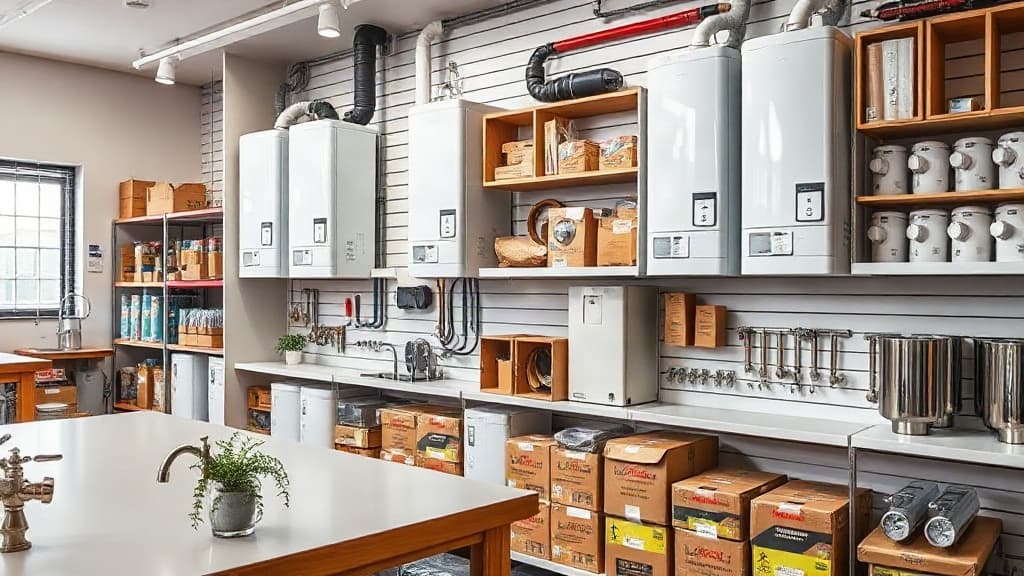
Italian distribution is organised by product sector, and each sector has its association. In plumbing, heating and bathroom products, ANGAISA, which has represented Italian distributors in the sector since 1956 and belongs to Confcommercio, groups 250 distributor companies with over 1,000 sales points across 16 regional sections. In electrical materials, FME (Federazione Nazionale Grossisti Distributori Materiale Elettrico) reports 83 member companies with 1,300 sales points. In building materials, Federcomated, the federation of building-materials merchants, says it represents over 9,000 distributor companies through its provincial associations.
ANGAISA describes its members as wholesalers that work nationally or across smaller areas: several regions, one region or a locality. Territory is therefore part of the question. "Who distributes in Italy" usually means "who distributes in Lombardy, in Emilia-Romagna, in Campania", and a manufacturer may end up with several regional partners rather than one national one.
Buying groups, agents and product data
ANGAISA's membership includes, besides the distributors, 10 buying groups (gruppi d'acquisto) and 150 manufacturers as supporting members: the groups negotiate terms for their member distributors. ANGAISA's own services include an electronic B2B price list and the ETIM product classification, so expect a distributor to ask for your product data in a structured format, not only as PDFs.
A common route to the trade is a commission agent (agente di commercio) who already visits distributors in a region. An agency contract carries its own obligations under Italian law; take local advice before signing one.
How public buying works
Consip and MePA
Consip, the public purchasing company of the Ministry of Economy and Finance, runs Acquisti in rete PA: conventions (Convenzioni), framework agreements (Accordi quadro), a dynamic purchasing system and MePA, the electronic marketplace for public administration. Suppliers apply for admission to MePA and to the dynamic system; once admitted, they can answer requests for quotation (RDO), including open RDOs addressed to all operators. Consip also publishes an annual tender plan (Piano gare) and its market consultations, the place to see what is coming in your category.
Regional purchasing centres
Under Decree-Law 66/2014, administrations must buy certain categories of goods and services above set thresholds through soggetti aggregatori, with the categories fixed periodically by prime-ministerial decree. Intercent-ER, the Emilia-Romagna agency, is one of them and puts the ANAC-approved list at 32 bodies. Others include ESTAR, the central purchasing body for the Tuscan regional health service, and Soresa in Campania, which runs a regional electronic market and online supplier registers (albi telematici). For a health-related category, check the regional centre's tenders and supplier registers first.
Qualification and the direct-award band
The 2023 public contracts code (d.lgs. 36/2023) adds a qualification system. A contracting authority that is not qualified may buy supplies and services on its own only up to the direct-award thresholds; above them it must use a qualified contracting authority or central purchasing body (art. 62). Below €140,000 a supply or service contract may be awarded directly, even without consulting several operators (art. 50(1)(b)); from €140,000 up to the EU threshold the buyer may use a negotiated procedure without a notice, consulting at least five operators identified through market surveys or lists of operators (art. 50(1)(e)). Small-ticket public demand therefore goes to firms the buyer can find: distributors on its supplier lists, on its regional marketplace or on MePA.
Where awards are published
Under art. 85 of the code, notices and award notices are published in ANAC's national public contracts database (Banca dati nazionale dei contratti pubblici) and on the contracting authority's own website, and their legal effects run from publication in the database. ANAC's Piattaforma di Pubblicità a Valore Legale is the platform for that publication. Above the EU thresholds, which for 2026 and 2027 are €140,000 for central government and €216,000 for other authorities for supplies and services, the award notices also appear on TED. Each award names the winning company: a wholesaler that keeps winning school furniture or hospital consumables in one region is a distributor with proven demand.
Who decides and what a first meeting looks like
In an Italian distributor the decision on a new range usually sits with the owner or the commercial director; in a buying group, with the group's buyers. Write to that person, by name and by role.
The first meeting will turn on four things:
- Access to public instruments. If your category is bought through MePA, a Consip convention or a regional marketplace, ask whether the distributor is already admitted and what it needs from you to list your range there: product data, certificates, prices.
- Invoicing. Invoices that operators resident or established in Italy issue to Italian public administrations must be electronic and pass through the Exchange System (Sistema di Interscambio, SdI); operators from outside Italy may invoice in paper or electronic form. An Italian distributor already runs this process for its public customers.
- Payment terms. Under art. 4 of d.lgs. 231/2002 the default term is 30 days; between businesses a term over 60 days must be expressly agreed, proved in writing and not grossly unfair to the creditor. Public administrations pay in 30 days, extendable to no more than 60 where objectively justified, and the terms are doubled for public health bodies.
- Structure. Margin, territory, exclusivity, who handles after-sales and spare parts, and prices and lead times you can hold for the life of a convention or framework.
Language and documentation
Italian is the working language. The Codice del consumo (art. 9) requires all information intended for consumers and users to be given at least in Italian, so any product that reaches end users needs Italian labels and instructions. Tender documentation is in Italian too, which means technical sheets, instructions, safety information, declarations of conformity and price lists in Italian before the first serious conversation, with references and samples to back them.
Lawful first contact
Italy requires consent for promotional e-mail, companies included: under art. 130 of the Codice in materia di protezione dei dati personali, and as the Garante's 2013 guidelines confirm, a cold introduction e-mail to a distributor needs its prior consent, even when the address is taken from its website or a public register. The lawful routes are a letter by post in Italian to the owner or commercial director, a stand or a visit at the sector's trade fair, and an introduction through an association, an agent or an existing Italian partner. Once a distributor has written to you, e-mail is fine. The rules are in Italy, the Netherlands and the Nordics: where B2B e-mail needs consent, and the Italy market page sets out the entry steps.
Where Cresques fits
Italy is a Cresques market. When you create a market for Italy, Cresques reads the TED award notices for the CPV categories you choose and shows which companies already win them, with company-level data kept and personal details removed; the materials reader can suggest those categories from your brochure or website. Cresques does not read ANAC's national database, MePA orders or regional marketplaces, so direct awards and other below-threshold contracts are not in its evidence. Company profiles with an AI-researched role and first messages drafted in the local language are live; e-mail alerts on new awards come with paid plans.
What this means for a manufacturer
- Map the sector association and the regional distributors in your category; expect several regional partners rather than one national one.
- Find the buying groups and, where it fits, a commission agent who already visits the trade.
- Use award notices on TED and in ANAC's database to see who wins your category, and check whether it is bought through Consip, MePA or a regional purchasing centre.
- Prepare the Italian file first: technical sheets, instructions, conformity documents, price list and structured product data.
- Agree payment terms within d.lgs. 231/2002 and expect 30 days, or 60 for health bodies, on public work.
- Make the first contact by letter, fair or introduction. Not by cold e-mail.
This guide summarises public rules as of 29 October 2026. It is general information, not legal or tax advice. Check the current text of the law and your own case with your adviser.