Dealer, buying group or head office? The three routes into a distributor
B2B supply distribution runs through independent dealers, buying groups and multi-branch head offices; each decides on new suppliers differently.

Marta Zielińska · Market research
Updated 23 August 2026 · 5 min read
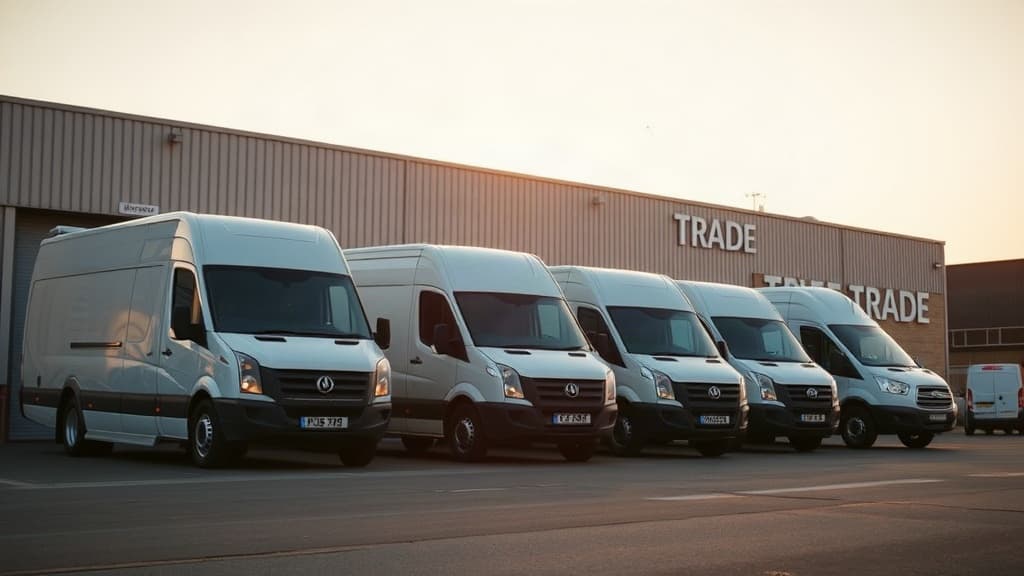
When a manufacturer says "we need a distributor in France", it usually imagines one kind of company: a local firm that buys the goods, stocks them and resells them. In practice, the companies that already sell your category to institutional and trade customers are organised in three quite different ways, and each of them takes on new suppliers through a different door.
Putting it simply: an independent dealer decides on its own and quickly; a buying group decides centrally for many members and slowly; a multi-branch distributor decides at head office and rolls the decision out to its branches. Before you write to anyone, work out which of the three you are looking at.
The three ways B2B supply is organised
1. The independent dealer
A dealer is a locally owned reseller. It buys for its own account, holds stock or orders against demand, and sells to offices, schools, hospitals, builders or workshops in its region. The owner or a purchasing manager decides which brands to carry. There is no committee.
Dealers are the fastest route in. They are also the smallest: one dealer rarely covers a whole country, and its credit line and warehouse are limited. A manufacturer that wins a dealer typically gets a region, not a market.
2. The buying group
Buying groups (purchasing co-operatives, "groupements", "Verbundgruppen") exist so that independent dealers can buy together on better terms. The European Commission's 2023 guidelines on horizontal co-operation treat this as "joint purchasing": two or more companies sourcing products together, whether through a jointly controlled company, a co-operative or a looser alliance that only negotiates conditions for its members.
The practical consequence for a supplier is a two-step decision. First, a central purchasing or listing committee decides whether you become a referenced supplier of the group. Then each member dealer decides whether to actually order from you. Being listed is necessary but not sufficient; many listed suppliers sell very little because they never did the second step with individual members.
Listing cycles are typically annual and tied to the group's catalogue and trade fair calendar, so a missed window can cost a year.
3. The head office of a multi-branch distributor
National and multinational distributors run a central assortment. Category managers at head office decide what is listed, negotiate prices and data requirements, and the branches sell from that assortment. A branch manager can usually buy locally for a specific project, but cannot add a supplier to the range.
This route is the slowest to open and the hardest to lose once open. Head offices typically expect complete product data, EDI capability, agreed delivery terms and a supplier who can serve every branch from day one.
Who decides on a new supplier
| Route | Who says yes | What they ask first |
|---|---|---|
| Dealer | Owner or purchasing manager | Margin, delivery time, samples, local references |
| Buying group | Central listing committee, then each member | Group conditions, catalogue data, bonus structure |
| Head office | Category manager, often with quality and logistics | Product data, EDI, certifications, nationwide service |
The person who signs is not always the person who opens the door. In a buying group, a member dealer who likes your product can sponsor you to the committee. In a multi-branch distributor, a branch manager with a live project can push head office to add you for that project.
How to recognise each route from public evidence
Public contract award notices on TED (the EU's procurement journal, which publishes more than 3,000 notices every working day) name the winning company for each lot. Read across many notices for one category and one country, and the three routes become visible.
A head office shows up as a repeat winner. The same company name wins lots for hospitals in one region, universities in another and a ministry in the capital. The eForms notice format records the organisation's name and identifier, so repeats can be counted. A company that wins everywhere has a central bid desk, national logistics and the capacity to serve a whole country.
A buying group shows up in two ways. Either the group itself tenders in its own name, or its members win individually but with the group's identity in their name or trading style. A string of different small winners sharing one brand across regions is often one group.
A dealer shows up once or twice, close to home. A winner that appears for a single city or county, usually with a small or micro company size recorded in the notice, is a local reseller.
Watch who the buyer is. Directive 2014/24/EU defines a "central purchasing body" as a contracting authority that buys, or awards framework agreements, on behalf of other authorities. A company that wins a central purchasing body's framework serves many institutions through one contract; that is head-office behaviour, even if the company is medium-sized.
Two things the evidence does not settle
First, a winner is not automatically a distributor. Manufacturers also win public contracts directly. A winner that makes what it sold is your competitor, not your route to market; check what the company does before you call it a distributor.
Second, route and size are not the same thing. A large dealer can behave like a head office in its region, and some buying groups have central warehouses that make them look like a distributor. Treat the three routes as a reading of how decisions are made, not as a classification of company size.
What this means for a manufacturer
Choose the route before you choose the company. If you need a quick first reference in a new country, a dealer with a live tender history is the shortest path. If your category is sold mainly through independent trade, you will eventually need a buying group listing, so start the conversation with members who can sponsor you. If your product needs nationwide service, prepare the data and logistics a head office expects before you knock.
Then address the person who decides for that route, in that route's language: margin and delivery for the dealer, listing conditions for the group, assortment logic and data for the head office. In Cresques, a market is a country plus the CPV categories you sell; the award notices behind it show you the repeat winners, the one-off local winners and the buyers they serve, which is the raw material for this decision.