Office supplies and consumables
How public bodies buy paper, stationery and printer consumables through frameworks, the contract stationers that win them, and what they ask of a manufacturer.
Updated 16 October 2026
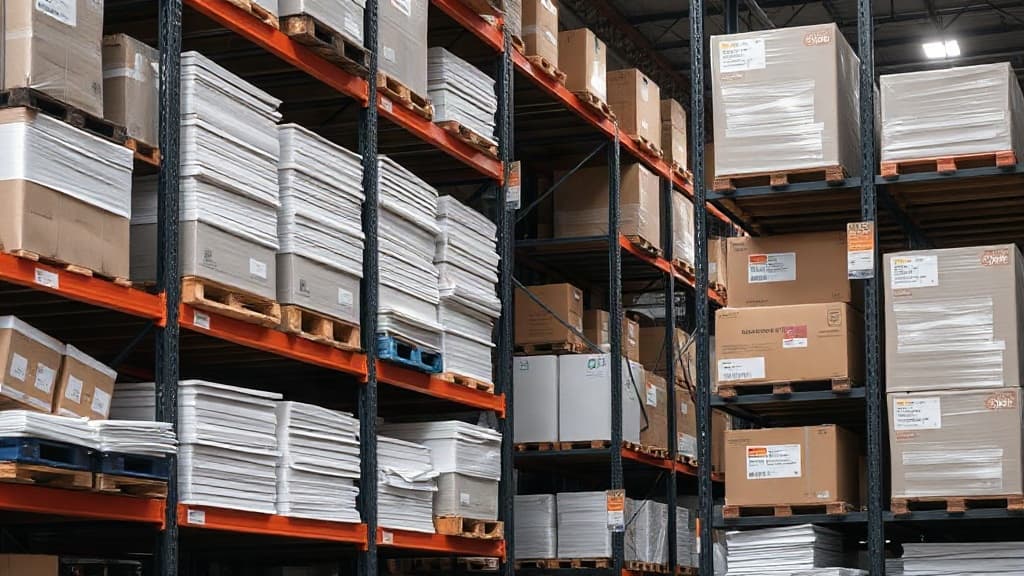
What public buyers purchase
Every public office, school and hospital uses office supplies, and the buying is highly consolidated. Public bodies order copier and printing paper, envelopes and printed stationery, writing instruments, filing and archive products, labels, small desk equipment and printer consumables. In the CPV the core codes are 30192000 Office supplies and 30192700 Stationery, with 30197000 Small office equipment, 30197630 Printing paper and 30199000 Paper stationery and other items, and 30125100 Toner cartridges and 30192113 Ink cartridges for consumables.
Because the items are standard and each order is small, public bodies tend to buy through framework agreements and central purchasing bodies rather than tender every need. In the UK, the Government Commercial Agency (formerly Crown Commercial Service) runs Office Solutions (RM6299), open to the whole UK public sector, with one lot for general office products and one for electronic office supplies. In France, UGAP, the national central purchasing body, lists stationery and supplies, including copier paper, among its product categories.
How distribution works
Office supplies reach public buyers mainly through contract stationers: companies that run a broad online catalogue, connect it to the buyer's purchasing system, deliver next day to many sites and report spend back to the buyer. Behind them sit office-products wholesalers that stock many manufacturers' ranges and supply resellers who do not hold stock themselves. Branded manufacturers sell to both layers, and the stationers' own-label ranges compete for the same lots.
The route for a foreign manufacturer therefore runs through the contract stationers and wholesalers that already win public frameworks. Award notices on TED name the winner of each lot and tag the CPV category, so the stationer supplying a region's councils or a national ministry is visible from the public record. Cresques uses that evidence to show who sells a category where; it does not help you bid.
What distributors expect
Stationers compete on catalogue breadth, price and service, so they look for products that slot in without friction:
- Catalogue-ready product data: EAN codes, pack sizes, images, descriptions in the local language and environmental attributes, in the format of the distributor's catalogue system.
- Environmental evidence a buyer can score. For paper, the EU Ecolabel for graphic paper, whose criteria are set in Commission Decision (EU) 2019/70 and valid until 31 December 2028, and chain-of-custody certification such as FSC. For printer consumables, buyers can draw on the EU green public procurement criteria for imaging equipment, consumables and print services.
- Readiness for the EU Deforestation Regulation (EU) 2023/1115, which covers paper and paperboard and applies to paper and paperboard from 30 December 2026 for every operator, whatever its size, because the deferral for micro and small operators does not cover products that were under the EU Timber Regulation (Article 38(3) as amended by Regulation (EU) 2025/2650). Products made entirely from recovered paper are excluded. For virgin-fibre paper, the operator files the due diligence statement: you, if you make the paper in the EU, or your EU importer, who will need geolocation and supply-chain data from you; distributors further down keep the statement's reference number. A distributor will ask for the information it needs for its own due diligence.
- Product safety. Items that consumers can also use fall under the General Product Safety Regulation (EU) 2023/988, applicable since 13 December 2024, under which such a product may only be placed on the EU market if an economic operator established in the EU is responsible for it.
- Price stability and continuity: frameworks often fix prices for set periods, so a distributor needs agreed price-review rules and assured supply for every line it lists.
Markets to start with
France. UGAP and large regional buyers, served by national contract stationers and wholesalers. B2B e-mail to a company's generic address (info@, contact@) needs no consent under CNIL guidance, so a first approach by e-mail is workable; a named professional address needs more (see France).
Germany. A public sector that buys through federal, state and municipal bodies, with a dense network of office-products dealers. E-mail advertising without prior express consent is unlawful, so plan on letters, trade fairs and introductions.
UK and Ireland. The UK buys through frameworks such as Office Solutions and publishes above-threshold awards on Find a Tender rather than TED. Unsolicited e-mail to companies is allowed if you identify yourself and give an opt-out. Ireland stays inside the EU regime, so its awards appear on TED.
Netherlands. A compact market with demanding sustainability specifications. Unsolicited commercial e-mail requires prior consent, including for businesses, unless the company has published an address specifically for receiving such offers, so the first contact is by post, at a fair or through an introduction.
Nordics. Sweden, Denmark and Finland publish on TED as EU members and Norway does so through the EEA, so the same evidence is available. Check each country's rules on commercial e-mail before writing.
The industry in numbers
Public supply contracts across 30 European countries, from TED award notices (2023-11 – 2026-11)
- Contracts awarded
- 20.2K
- Awarded value
- €6.1B
- 65% of awards with a published value
- Won from abroad
- 1.1%
Table view
| Office machinery, equipment and supplies except computers, printers and furniture | 20,225 |
Questions
- Which CPV codes cover office supplies and stationery in public tenders?
- The core codes are 30192000 Office supplies and 30192700 Stationery, with 30197000 Small office equipment, 30197630 Printing paper and 30199000 Paper stationery and other items. Printer consumables sit under 30125100 Toner cartridges and 30192113 Ink cartridges.
- How do public bodies in Europe buy office supplies?
- They tend to buy through framework agreements and central purchasing bodies rather than tender every need, because the items are standard and each order is small. In the UK, the Government Commercial Agency runs Office Solutions (RM6299); in France, UGAP, the national central purchasing body, lists stationery and supplies, including copier paper, among its product categories.
- Who wins public office supplies contracts in Europe?
- Mainly contract stationers: companies that run a broad online catalogue, connect it to the buyer's purchasing system, deliver next day to many sites and report spend back to the buyer. Behind them sit office-products wholesalers that stock many manufacturers' ranges. Award notices on TED name the winner of each lot and tag the CPV category.
- Which EU rules apply to paper and office products sold through distributors?
- The EU Deforestation Regulation (EU) 2023/1115 covers paper and paperboard and applies to paper and paperboard from 30 December 2026 for every operator, whatever its size: the deferral to 30 June 2027 for micro and small operators does not cover paper, which was already under the EU Timber Regulation (Article 38(3) as amended by Regulation (EU) 2025/2650). Products made entirely from recovered paper are excluded. Items that consumers can also use fall under the General Product Safety Regulation (EU) 2023/988. Buyers also score environmental evidence such as the EU Ecolabel for graphic paper and FSC chain-of-custody certification.