Selling into the EU from outside it: the responsible person rule (GPSR) and why a distributor often solves it
Since 13 December 2024 a consumer product may be placed on the EU market only if an economic operator in the Union is responsible for it. Who can be that operator.

Marta Zielińska · Market research
Updated 16 October 2026 · 6 min read
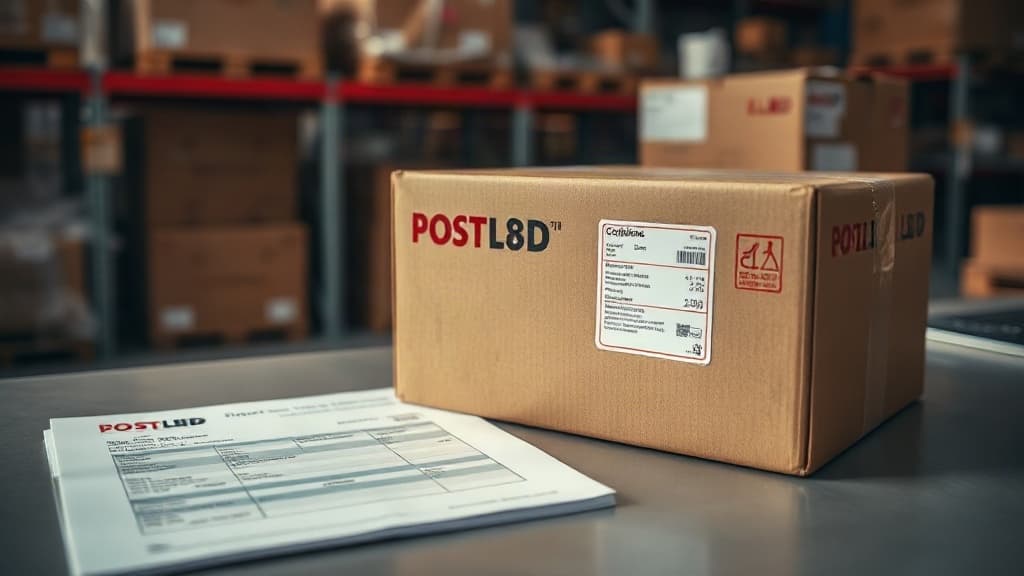
A manufacturer in the United States, the United Kingdom, Turkey or China who wants to sell a consumer product in the EU meets one rule before any other: someone established in the Union must be responsible for that product. Since 13 December 2024 this is written into the General Product Safety Regulation, and it changes how a first conversation with a European distributor goes.
Putting it simply: under Article 16 of Regulation (EU) 2023/988, a consumer product may be placed on the EU market only if there is an economic operator established in the Union who is responsible for it. That operator can be the manufacturer itself (if it has an EU establishment), an importer, an authorised representative appointed in writing, or a fulfilment service provider. Its name and contact details must appear with the product. For a manufacturer outside the EU, the distributor or importer who buys the goods is very often the natural candidate — which is one more reason to choose that partner on evidence.
What the regulation requires
The General Product Safety Regulation (GPSR) replaced the 2001 General Product Safety Directive. It applies to consumer products placed on the EU market, including products sold at a distance, and it applies from 13 December 2024 (Article 52).
Article 16(1) is the provision that concerns a non-EU manufacturer most. In the Regulation's words, a product "shall not be placed on the market unless there is an economic operator established in the Union who is responsible for the tasks set out in Article 4(3) of Regulation (EU) 2019/1020 in respect to that product". Article 16(1) also applies Article 4(2) of that Market Surveillance Regulation, which names four kinds of operator who can hold that role:
- the manufacturer, where it is established in the Union;
- an importer, defined in Article 3 as "any natural or legal person established within the Union who places a product from a third country on the Union market";
- an authorised representative, defined as "any natural or legal person established within the Union who has received a written mandate from a manufacturer to act on that manufacturer's behalf";
- a fulfilment service provider, where none of the above is established in the Union.
Article 4(3) of Regulation (EU) 2019/1020 lists the responsible operator's tasks: verifying that the declaration and technical documentation have been drawn up and keeping them available for the authorities, providing information on request, informing the market surveillance authorities when a product presents a risk, and cooperating on corrective action. Article 16(2) GPSR adds regular checks that the product complies with its technical documentation and with the GPSR's labelling and information requirements. Article 16(3) adds that the name and contact details of the responsible operator "shall be indicated on the product or on its packaging, the parcel or an accompanying document".
Putting it in commercial terms: without an EU operator who accepts this role, your product should not be on sale in the Union, and a serious distributor will ask about it before it asks about price.
Three ways a manufacturer outside the EU can meet the rule
1. The importer is your distributor
In the classic distribution model the European distributor buys the goods, imports them and resells them. By doing so it becomes the importer in the Regulation's sense and can be the responsible economic operator. This is the simplest arrangement for both sides, provided the distributor understands the obligations in Article 16 and your technical documentation is in order. Expect the distributor's purchasing manager to ask for the documentation up front; a manufacturer who arrives with it saves weeks.
2. An authorised representative
Where you sell through several distributors, none of whom wants to be the single responsible party, or where you ship directly to business customers, you can appoint an authorised representative in the Union by written mandate. Specialised service companies offer this role for a fee. The representative's details then go on your products and documents, and your distributors can concentrate on selling. An EU distributor that buys from you outside the EU is still an importer with its own duties under Article 11 — its name and address on the product, checks before placing on the market, keeping the technical documentation — and the authorised representative takes the Article 16 role, not those duties.
3. Your own EU establishment
A subsidiary or branch in the Union can hold the role itself. For a first market this is usually the most expensive option and rarely the first step; it becomes sensible once volumes justify local staff. The Regulation does not require a subsidiary — an importer or representative satisfies it.
Why this matters for choosing a distributor
If the distributor will be your importer and responsible operator, you are not only picking a sales channel; you are picking the party whose name goes on your product in Europe and who answers to market-surveillance authorities on your behalf. That raises the bar for how you select it:
- Evidence that it already handles your category. A company that has won public contracts for the same type of product has shown it can import, stock, document and deliver it — the award notice is public, and you can read it.
- A record of compliance. Public buyers demand conformity documentation at tender stage; a distributor with repeated awards in a category has been through that scrutiny.
- Capacity to carry the role. Smaller resellers may prefer that you appoint an authorised representative instead. Ask early, in the first meeting, not after the first order.
This is where Cresques fits: it shows which companies already sell your category in a given EU country, with the award notices as evidence, so the conversation about who will be the responsible operator starts with the right candidates.
Scope and limits
The GPSR applies to consumer products and to products likely to be used by consumers, including those sold online. Many professional and industrial goods fall under sector-specific rules instead — machinery, medical devices, personal protective equipment, construction products — each with its own obligations for non-EU manufacturers and, in several cases, its own form of EU representative. A manufacturer should check which regime covers the product before deciding who the responsible operator will be. Where a product is covered by a sector-specific regulation that already provides for an EU operator, that regime governs.
Nothing here is legal advice. The Regulation's text is linked below; a distributor's or a compliance adviser's reading of it for your product category is worth an hour before the first shipment.
What this means for a manufacturer
- From 13 December 2024, a consumer product needs a responsible economic operator established in the EU before it is placed on the market (GPSR, Art. 16).
- The operator can be the manufacturer, an importer, an authorised representative or a fulfilment service provider; its contact details must appear with the product.
- In a distributor model the importing distributor usually takes the role — so choose it as carefully as you would choose a partner whose name goes on your product.
- Arrive with the technical documentation ready; it is the first thing a distributor will ask for.
- Check whether sector-specific rules apply to your product instead of, or in addition to, the GPSR.