Cresques vs Volza: customs trade data vs public procurement inside the EU
Volza indexes customs and bill-of-lading records; between EU countries none exist. What each source shows, and when Volza is the better choice.

Tomasz Kowal · Data and public procurement
Updated 29 October 2026 · 6 min read
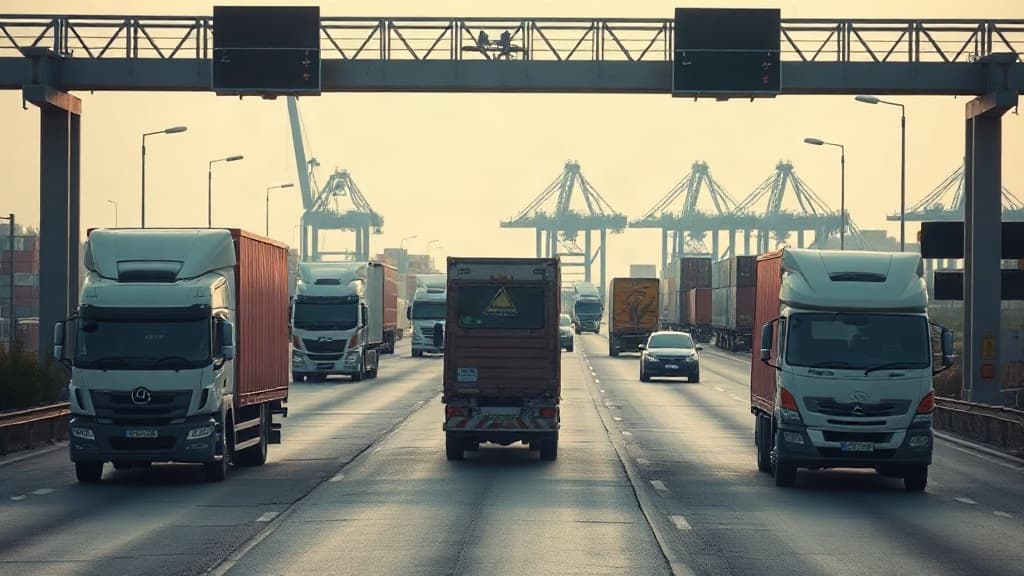
Volza is a trade-data platform: search an HS code and see who shipped what to whom. For a manufacturer seeking EU distributors, the question is what it can show about trade between two EU countries.
Putting it simply: Volza turns customs and bill-of-lading records into searchable shipments with buyer and supplier names, and it is strong wherever such records exist. Between EU member states there are no customs declarations, so no customs-based tool can show a French distributor buying from a German maker. Cresques uses a different public record: the contract award notice, in which a public buyer names the company that supplied a category. Use Volza for trade that crosses a customs border; use award notices for evidence of who sells your category inside the EU.
Disclosure: Cresques is our own product. We compare on criteria you can check yourself and link to each source.
What Volza is, as of October 2026
Volza presents itself as "Global Export Import Trade Data of 200 Countries", with 3.126 billion shipments, backed by InfodriveIndia, "serving over 25,000 customers worldwide". Its country pages list shipment details such as date, exporter name, HS code, value and origin country, and every plan includes a "Complete Bill of Lading View".
Volza publishes its coverage tiers: "detailed data" with both buyer and supplier names, "one side data", and "detailed mirror data … with both buyer and supplier names and between 30% to 40% coverage". Mirror data reconstructs a country's trade from its trading partners' records. Volza's Germany export factsheet gives the source as "Detailed Mirror Data", with "40%" coverage, updated monthly.
Volza also offers verified phone, e-mail and LinkedIn contacts, dashboards, and price analysis "based on past transactions". Its pricing page listed, in June 2026, annual plans at US$1,500 (Startup, 182 countries), US$4,500 (SME) and US$9,600 (Corporate, both 203 countries), and a seven-day free trial without a credit card.
Why customs data goes quiet between EU countries
In the European Commission's words, once goods are in the Union "no more customs duties are due, and no more customs checks are conducted — all goods circulate freely within the EU". No border formality, no declaration. Trade between member states is measured through Intrastat, "the data collection system for compiling statistics on international trade in goods between the European Union (EU) Member States", and Eurostat publishes it by product and partner country, never by company.
Mirror data cannot fill the gap: two EU companies trading together produce no customs record on either side, so nothing can be mirrored. It can show an EU company's trade with a non-EU partner whose records name it — useful, but a different question.
What Cresques is
Cresques is a web application for a manufacturer entering a new EU market through distributors. You create a market — a country plus CPV categories — and see the companies that have won public contracts in those categories, each tied to an award notice you can open, with the route to market and the lawful first-contact channel for that country. A materials reader proposes CPV categories from your brochure. Pricing is in credits, shown in the app before you pay. Company profiles with an AI-researched role and first messages drafted in the local language are live; e-mail alerts on new awards come with paid plans.
TED publishes more than 3,000 procurement notices every working day, with free access. Above the EU thresholds, a public buyer must publish an award notice naming the winner, its address, whether it is an SME, the value and the CPV codes (Directive 2014/24/EU, Article 50 and Annex V Part D).
The comparison table
Volza descriptions are from Volza's own pages; prices as listed in June 2026.
| Criterion | Volza | Cresques |
|---|---|---|
| What it is | Trade-data platform built on customs and bill-of-lading records, with contacts and dashboards | Web application built on public award notices, for manufacturers seeking distributors in an EU or EEA country |
| Data source | Customs records and bills of lading; for EU countries such as Germany, mirror data from trading partners | Award notices published on TED by public buyers under a legal duty |
| Evidence that a company sells your category | Strong where records exist: shipments by HS code with buyer, supplier, date and value | Strong for public sales: buyer, date, value and CPV code in a notice you can open |
| Intra-EU coverage | None at shipment level: no customs declarations between member states | EU and EEA via TED; public buyers above the EU thresholds only |
| What you get | Shipments, buyer–supplier pairs, price and volume analysis, verified contacts | Companies tied to notices, route to market, lawful first-contact channel, CPV proposals; profiles with role and quotes; first message in the local language; alerts (Starter and above) |
| Cost model | Subscription, prices published (US$1,500–9,600 a year); free trial | Credits: free plan with one market map, then plans from €49 a month (pricing) |
| Best for | Trade crossing a customs border: non-EU markets, imports into the EU, price benchmarks | Evidence of who sells your category to public buyers inside an EU or EEA country |
Where the difference matters
Both sources are documents, not self-descriptions. A shipment record shows a transaction between two companies; an award notice, a contract between a company and a public buyer. Each has a blind spot. Customs data cannot see trade within the EU. Award notices miss private-sector sales and contracts below the thresholds, and do not show where the winner buys its stock; a shipment record can.
For a German manufacturer seeking a French distributor, the trade that matters leaves no company-level customs trace. For a manufacturer outside the EU the picture changes: Volza's country list shows Turkish and Vietnamese exports at 100% coverage. Where the exporting country's records name the buyer, EU importers of your category can appear by name; check the factsheet for your source country.
When Volza is the better choice
- Your target market is outside the EU. Where shipment-level records are published, Volza shows importers, volumes and prices.
- You manufacture outside the EU and want to know who imports your category. Records from your competitors' countries can name EU importers — something no award notice shows.
- Your buyers are private companies. Customs data records private cross-border trade; award notices cover public buyers only.
- You need price and volume. Unit values and quantities support pricing and market sizing; a notice gives a contract value at most.
- You want to map a competitor's supply chain. Shipment records show who supplies whom.
- You need named contacts today. Volza plans include verified contacts; Cresques drafts a first message for the company but does not supply named contacts.
What this means for a manufacturer
- Customs data needs a customs border; between EU member states there is none, so no tool shows shipment-level buyer–seller pairs there.
- Before buying trade data for an EU market, check the vendor's factsheet for that country's source and coverage.
- Inside the EU, the document naming who sold your category to whom is the award notice; its blind spot is private-sector-only distributors.
- Whatever the source, confirm each company in the business register and settle the lawful first contact before writing.